When Courage Meets Advanced Care
It’s not every day that a story of hope, resilience, and medical brilliance collides in a single operating theatre. Imagine living with a growing lump in your abdomen, day after day, feeling your body struggle under a weight you cannot see but can painfully feel. Every movement is a reminder that something is wrong, yet the sheer size and complexity of the problem feel insurmountable. For a 67-year-old patient from Halol, Gujarat, this was reality.
Over three months, what started as a subtle swelling in the abdomen began growing at an alarming rate, accompanied by sharp, persistent pain. Friends and family watched with helpless concern as the lump seemed to expand almost overnight, altering the patient’s daily life and routine. Uncertainty and fear loomed, what could this be? Could it be treated? Would surgery even be possible?
Diagnostic scans finally revealed the cause: a massive 26x20x20 cm tumour occupying the abdominal cavity, pressing against vital organs and causing significant discomfort. The diagnosis stunned even experienced medical professionals. This was not a typical growth; it was a well-differentiated liposarcoma (WDLPS), inflammatory subtype, a type so rare that it accounts for only 2% of all liposarcomas. In India, only two similar cases had ever been reported. The odds were daunting, but so was the determination to save a life.
Enter Parul Sevashram Hospital, a leading healthcare institution in Vadodara, known for its superspecialty care, state-of-the-art operating theatres, and modern intensive care facilities. Here, medical expertise meets compassion, and every patient is treated as more than just a case. The hospital’s team of specialists, led by Dr. Pratik Shah, Consultant GI Surgeon, immediately recognized that timely surgical intervention was the key. For this inflammatory subtype of WDLPS, complete removal of the tumour remained the most effective treatment; chemotherapy or radiotherapy offered limited benefit. The challenge was immense, but so was the capability of the team.
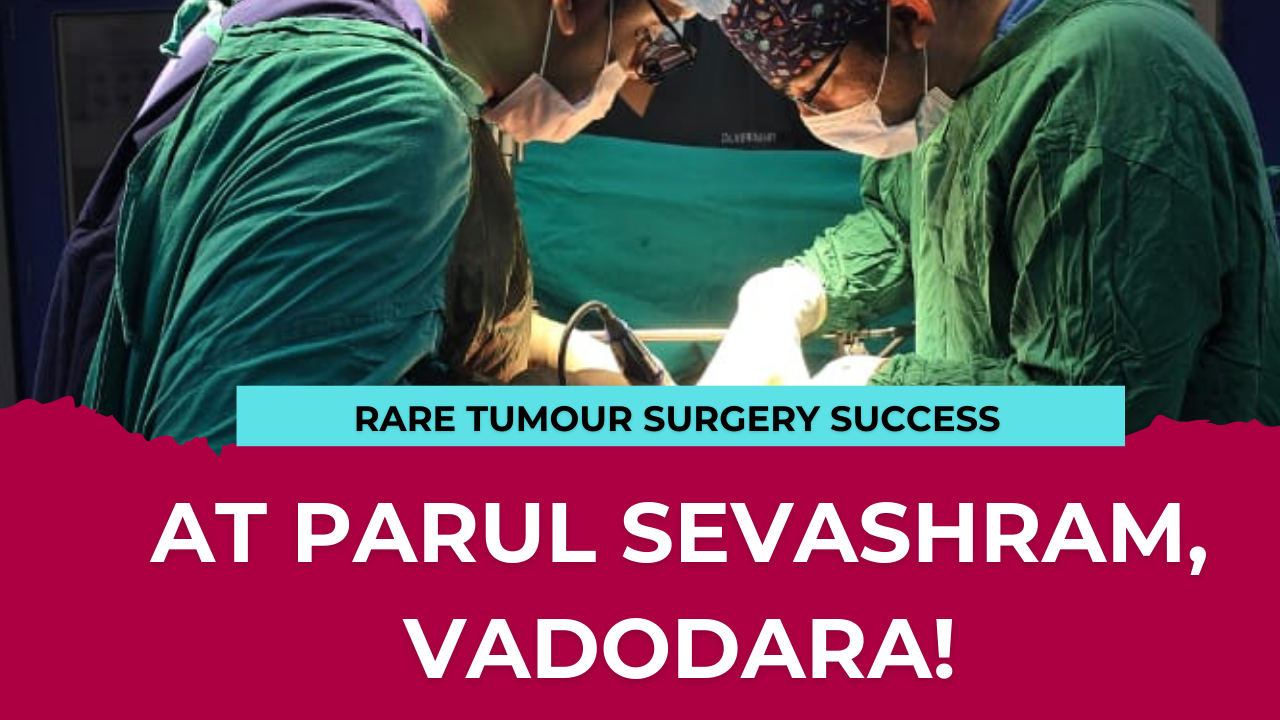
The procedure itself was complex and demanding. Removing a 5.5 kg tumour from the abdomen is not merely a matter of excision, it requires careful planning to avoid damaging organs, meticulous precision to ensure negative surgical margins, and seamless coordination among surgeons, anesthetists, and ICU teams. In this case, the operation also involved a right nephrectomy, demonstrating the surgical team’s skill in handling high-stakes, multi-organ procedures.
Yet, what makes this story particularly remarkable is not just the scale of the tumour or the technical feat, it’s the human element. The patient, despite the pain and anxiety, placed trust in the team, while the doctors balanced scientific rigor with empathy, understanding that behind every surgical plan is a person whose life is being transformed. This collaboration of trust, courage, and expertise is what turns challenging surgeries into success stories.
The operation was a triumph. The tumour was completely removed, and the patient recovered smoothly and uneventfully, thanks to timely intervention, precise execution, and advanced post-operative care. Such outcomes are not merely statistics, they are the difference between months of pain and years of health, between despair and hope.
Dr. Shah emphasized the rarity of the case: “The inflammatory subtype of WDLPS is extremely uncommon, and achieving a full excision is critical for long-term survival. Early diagnosis, careful planning, and a skilled surgical team made this possible.” His words underline a broader reality in medicine: success is rarely a single effort, it is the culmination of preparation, expertise, and the courage to act decisively when it matters most.
The patient’s treatment was also facilitated under the Pradhan Mantri Jan Arogya Yojana (PMJAY) scheme, reflecting how accessible healthcare policies can transform lives. With insurance coverage and government support, life-saving procedures no longer remain the privilege of a few, they become a reachable reality for anyone in need.
Beyond the medical details, this case highlights a broader narrative about the evolving landscape of healthcare in India. Hospitals like Parul Sevashram are not just treatment centres, they are innovation hubs, where advanced medical technologies, superspecialty expertise, and compassionate care intersect. They offer a model of comprehensive care, where patients can access diagnostics, surgery, post-operative care, and rehabilitation all under one roof. For communities in Gujarat and beyond, this means world-class healthcare without leaving the region.
It also brings attention to the often-overlooked reality of rare diseases and conditions. While common illnesses dominate public attention, rare cases like inflammatory WDLPS require specialized expertise and preparedness. Successful treatment demands not only knowledge and technology but also adaptability and collaborative decision-making, qualities that Parul Sevashram Hospital has clearly demonstrated.
Moreover, the case underscores the importance of early detection and timely intervention. The rapid growth of the tumour over three months could have led to life-threatening complications if not addressed promptly. Awareness, regular health check-ups, and proactive medical consultation are key messages emerging from this success story.
For patients, families, and the medical community, this case is more than a milestone, it’s an inspiration. It reassures those facing rare or complex health challenges that effective solutions are possible, provided there is access to expertise, infrastructure, and patient-centered care. It also sets a benchmark for hospitals aiming to combine technical excellence with human-centric care, demonstrating that the two are not mutually exclusive.
In conclusion, the removal of this 5.5 kg abdominal tumour is not just a surgical achievement, it is a testament to what is possible when medical science, innovation, policy support, and patient courage converge. For the patient from Halol, it is a second lease on life. For Parul Sevashram Hospital, it reinforces their reputation as a centre of excellence in comprehensive healthcare. And for the wider healthcare ecosystem, it serves as a vivid reminder: with dedication, skill, and timely action, even the most daunting medical challenges can be overcome.
As India continues to advance in medical capabilities, stories like this show that the future of healthcare is not just about treating diseases, it’s about transforming lives. And in every successful operation, in every patient walking out healthier than they walked in, lies the ultimate proof, that hope, skill, and human determination remain at the heart of medicine.